
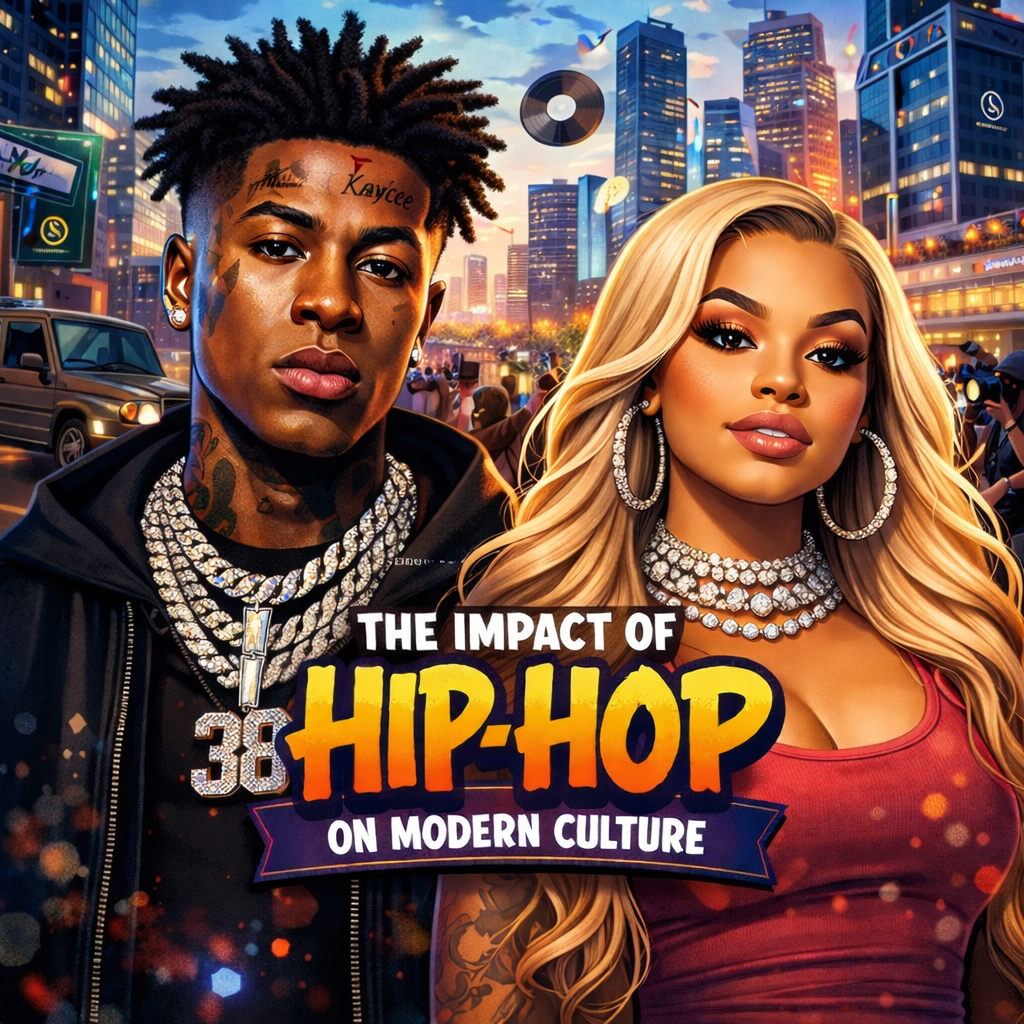
Hip-hop began in the Bronx during the 1970s as a grassroots cultural movement built around DJing, MCing, breakdancing, and graffiti art. What started as a localized form of expression for marginalized communities has evolved into the most influential cultural force on the planet.
Today hip-hop shapes everything from fashion and language to politics, technology, and global youth identity.
Modern artists like YoungBoy Never Broke Again and Latto represent a new generation proving that hip-hop is no longer just music — it’s a cultural operating system for the modern world.
1. Music: The Dominant Genre of the Modern Era
Hip-hop is now the most consumed genre of music globally.
Streaming platforms, radio, and social media have all been reshaped by rap music’s rise.
Artists release music faster, connect directly with fans, and influence global trends instantly.
Platforms like:
- Spotify
- YouTube
- TikTok
have accelerated hip-hop’s reach to billions of listeners.
Today the genre spans multiple styles:
• Trap
• Drill
• Melodic rap
• Rage rap
• Southern hip-hop
• West Coast bounce
Artists like YoungBoy have shown that an artist can dominate the internet without traditional industry marketing.

2. Fashion: Hip-Hop Became the Global Style Engine
Hip-hop has redefined fashion for the past 30 years.
Streetwear brands that once represented underground culture are now luxury staples.
Examples include:
• Supreme
• Off-White
• BAPE
Even high fashion houses now collaborate directly with hip-hop artists.
The genre popularized:
• Sneaker culture
• Designer streetwear
• Custom jewelry (“ice”)
• Luxury cars as status symbols
Artists have become fashion icons, influencing what millions wear daily.
3. Language & Internet Culture
Hip-hop slang often becomes mainstream language within a few years.
Terms that originated in rap lyrics or urban communities now dominate everyday speech and internet culture.
Examples include:
• “Cap / No cap”
• “Drip”
• “Lit”
• “GOAT”
Platforms like TikTok accelerate this process. Lyrics become memes, memes become slang, and slang becomes part of everyday language.
4. Social & Political Influence
Hip-hop has always been tied to social commentary.
From early pioneers addressing poverty and systemic inequality to modern artists speaking on police brutality, hip-hop acts as a voice for communities often ignored by mainstream institutions.
Artists have increasingly used their platforms for activism.
Major moments include:
• Black Lives Matter protests 2020 influencing rap releases
• Artists funding community programs
• Musicians speaking on prison reform
Hip-hop has evolved into both entertainment and social commentary.
5. Business & Entrepreneurship
Modern hip-hop artists are no longer just musicians.
They are brands, entrepreneurs, and media moguls.
Artists have built billion-dollar empires through ventures in:
• Fashion
• Alcohol brands
• Tech investments
• Media companies
Examples include artists like:
• Jay-Z
• Drake
• Kanye West
These figures proved that hip-hop can generate generational wealth and redefine business leadership in entertainment.
6. Global Cultural Movement
Hip-hop is now a worldwide language.
Countries across the globe have developed their own rap scenes influenced by American hip-hop culture.
Major hip-hop movements exist in:
• United Kingdom (UK Drill)
• France
• South Korea
• Nigeria
• Brazil
The culture now connects youth globally regardless of nationality or language.
The Modern Era: The Next Wave
Artists like YoungBoy Never Broke Again and Latto represent the current evolution of hip-hop.
They thrive in the streaming era where:
• fanbases are built online
• virality drives success
• artists control their own narratives
The new generation of rappers is shaping what hip-hop will look like for the next decade.
Leave a Reply